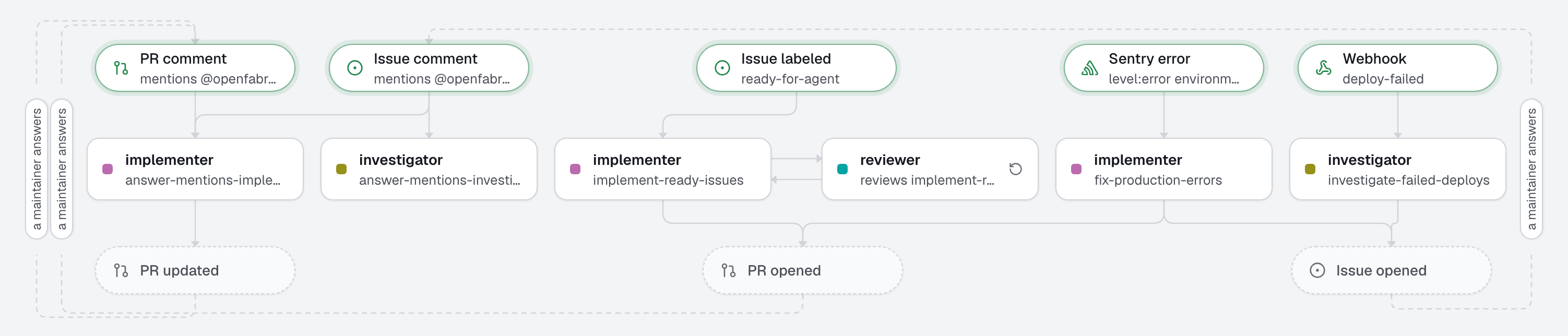
At a glance
The whole format in a few files: issues and production errors become pull requests, failed deploys become issues.
issue.labeledSentrya webhook
3 agents3 automations
openfabriq init --example 00-at-a-glance28 complete factories, each teaching one idea. Copy one into your repository with its command: your repository and GitHub login are filled in from gh. Then read the plan, and apply. Templates combine: take agents and automations from several.
28 templates found
The whole format in a few files, then the full flow from issue to pull request.
The whole format in a few files: issues and production errors become pull requests, failed deploys become issues.
issue.labeledSentrya webhook
3 agents3 automations
openfabriq init --example 00-at-a-glance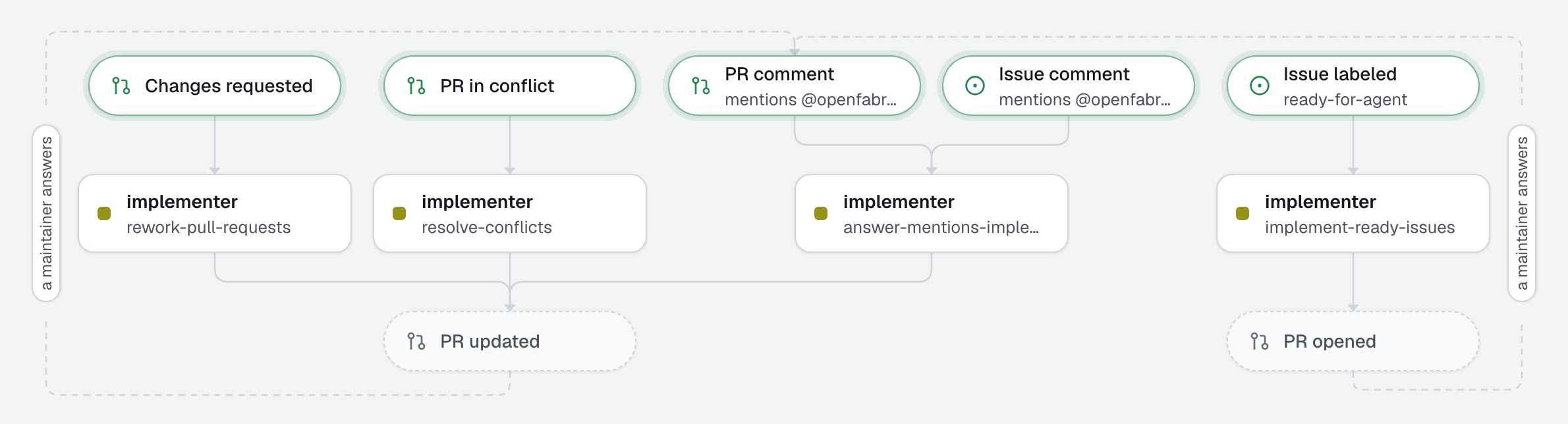
A maintainer labels an issue, an agent opens a pull request and changes it on a comment that mentions @openfabriq.
issue.labeledpull_request.commented
1 agent3 automations
openfabriq init --example 01-quickstart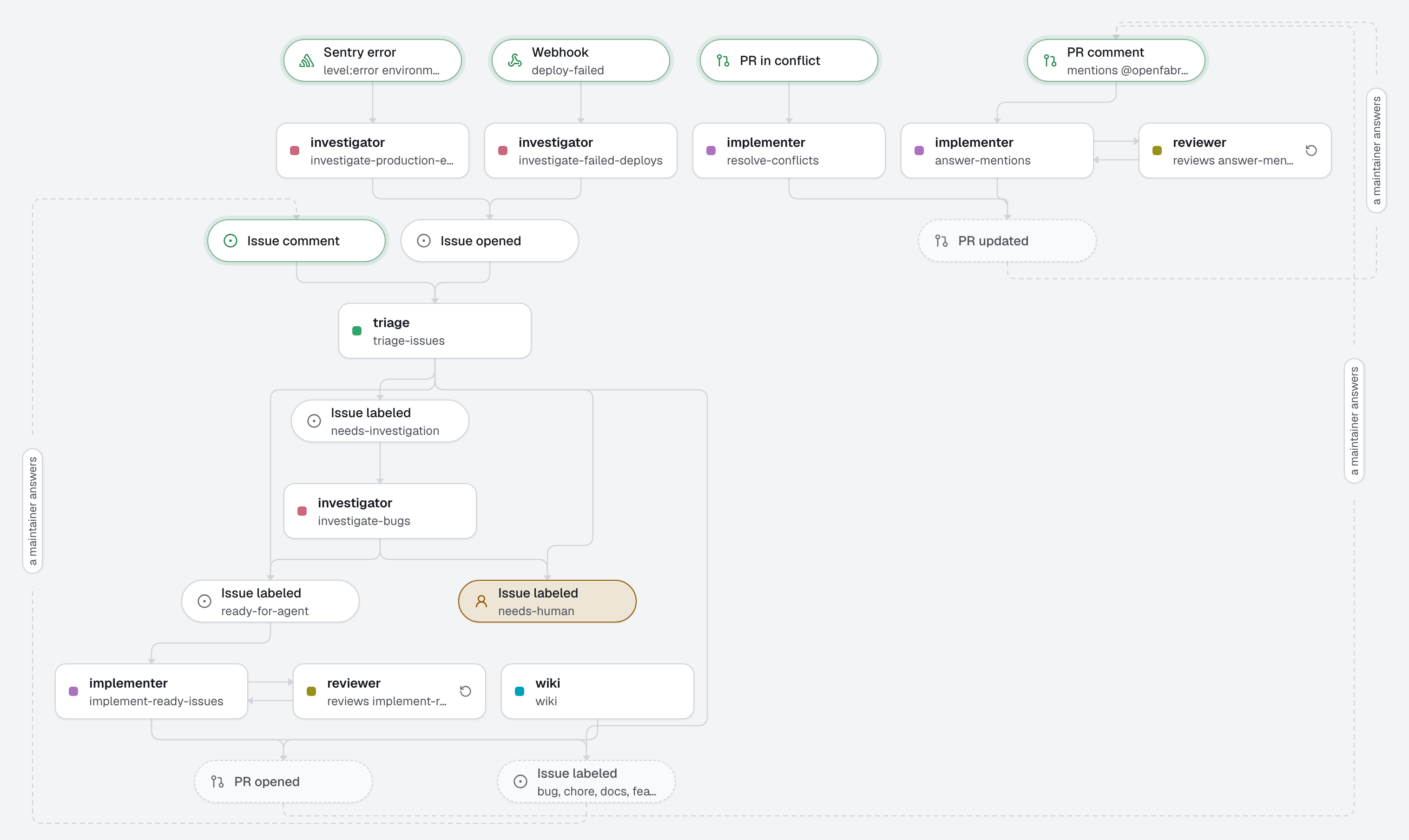
The full flow: triage, investigation, implementation reviewed adversarially before the pull request exists, conflicts resolved, with checks and screenshots as proof.
Issuespull requestsSentry
4 agents7 automations
openfabriq init --example 02-sdlc
Work from Slack mentions and Linear issues; Sentry errors become issues.
SlackLinearSentry
3 agents5 automations
openfabriq init --example 03-team-chat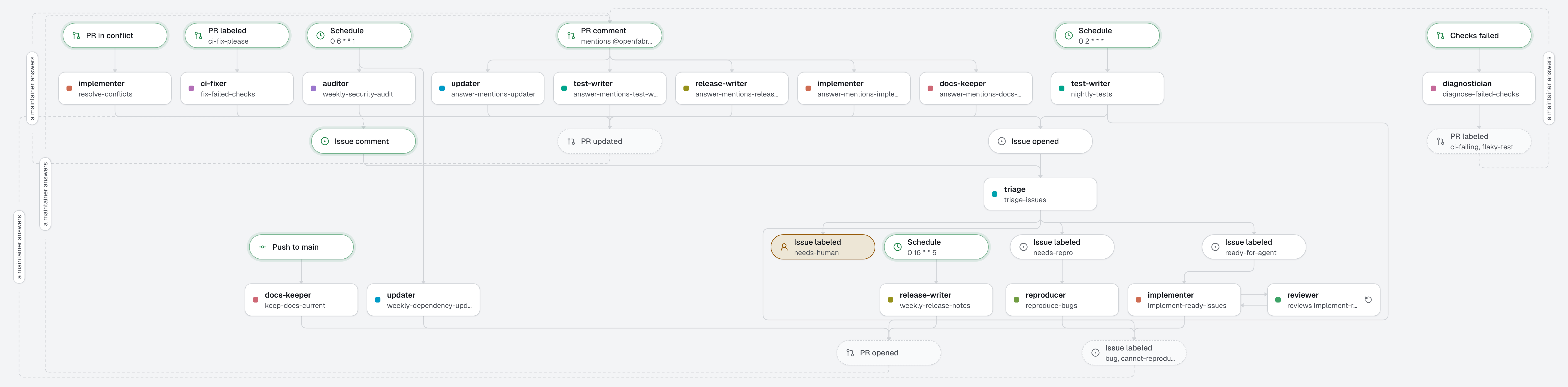
A dozen agents ordered by area: delivery at the root, then qa/, maintenance/ and security/, each folder with its agents and their automations.
Issuespull requestsschedules
11 agents11 automations
openfabriq init --example 04-large-factoryReviews, red checks, bugs proven by a test, changes checked in a real browser.
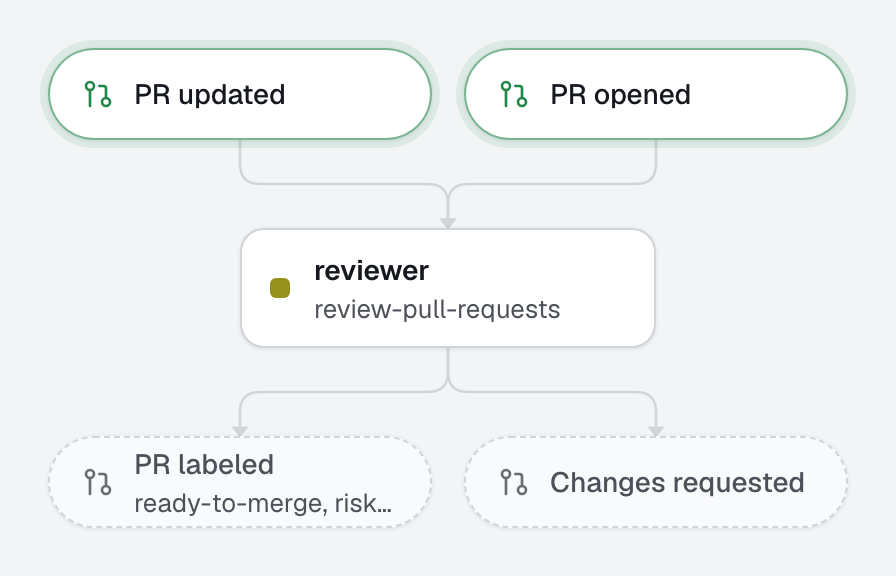
An advisory reviewer on every pull request, on another model.
pull_request.openedpull_request.updated
1 agent1 automation
openfabriq init --example 05-code-review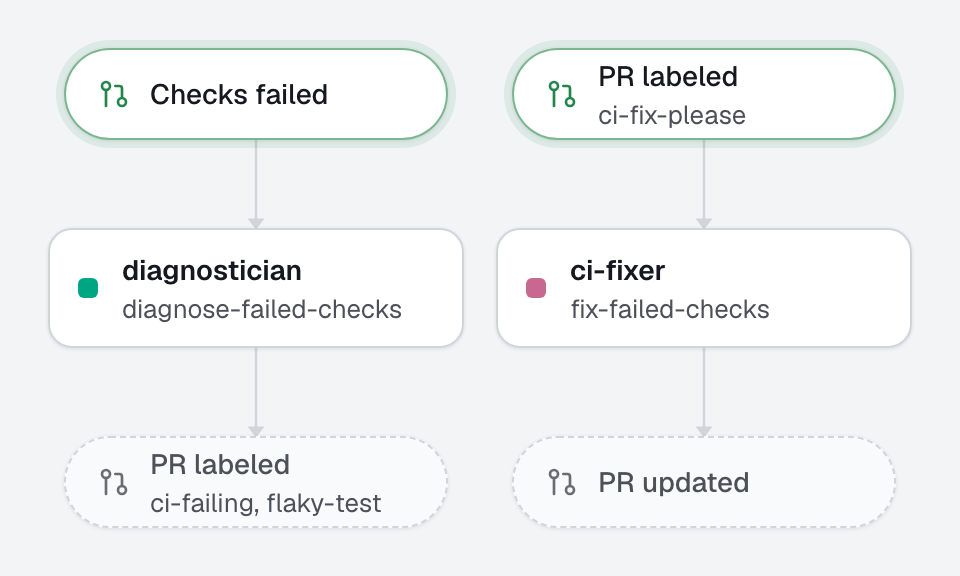
Reads failed CI logs and comments the cause and the fix; fixes on request.
pull_request.checks_faileda label
2 agents2 automations
openfabriq init --example 06-ci-doctor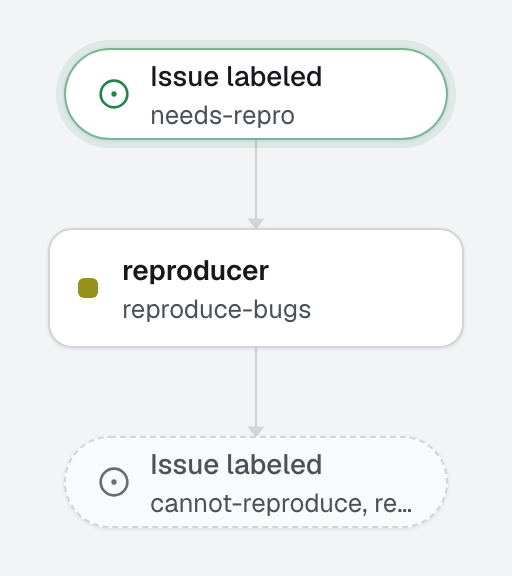
Proves a bug with a failing test before anyone fixes it.
issue.labeled needs-repro
1 agent1 automation
openfabriq init --example 07-bug-reproducer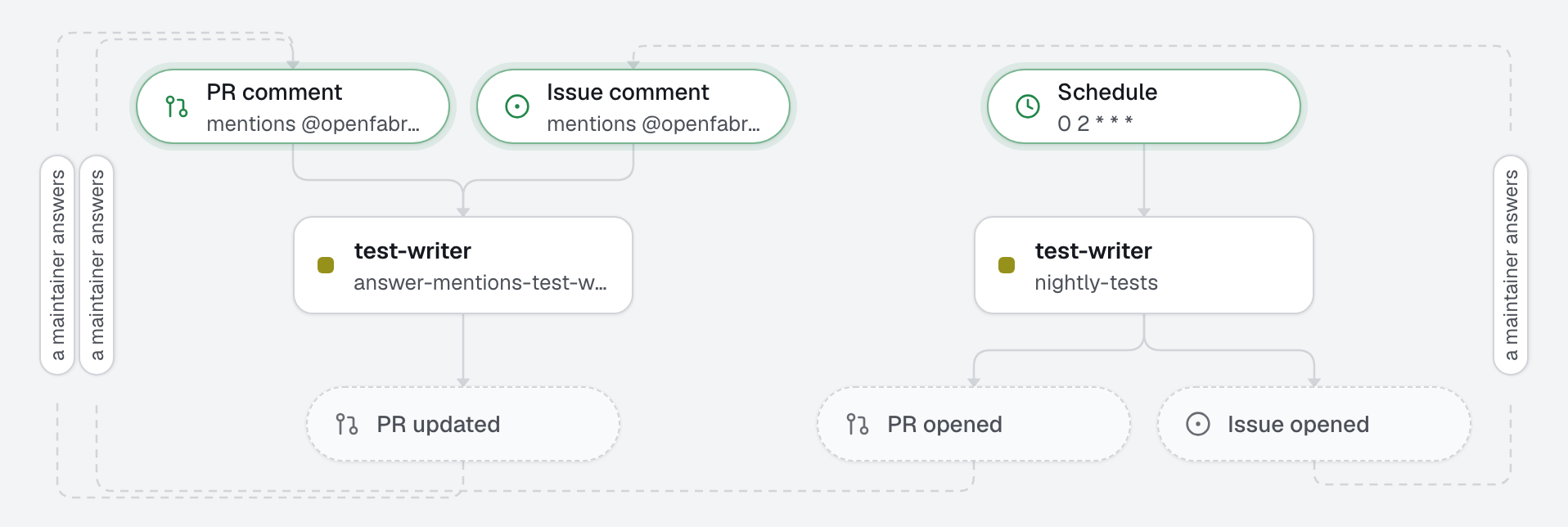
Adds behavioral tests to the least-tested module, every night.
schedule
1 agent1 automation
openfabriq init --example 08-test-coverage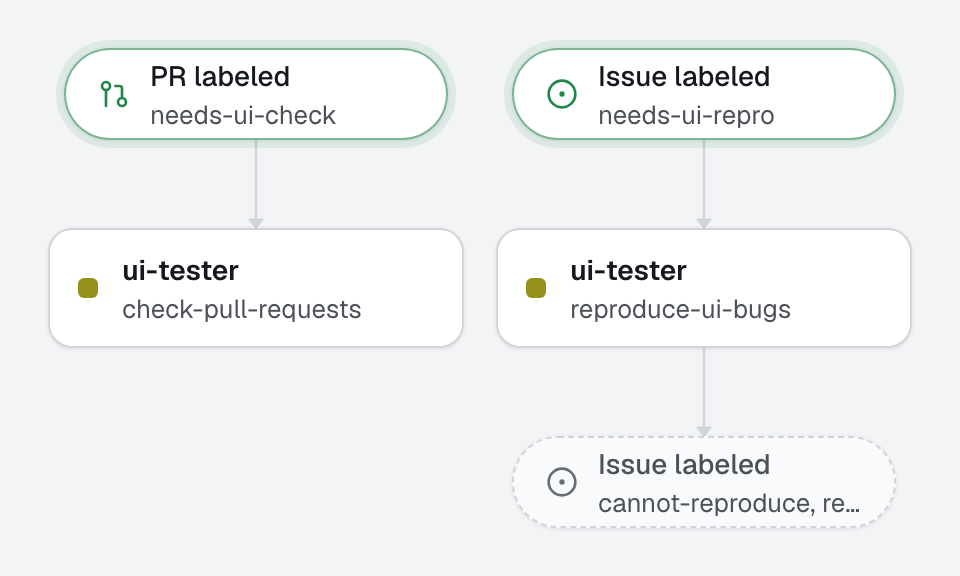
Checks a pull request's change in a real browser, including phone width and keyboard.
pull_request.labeledissue.labeled
1 agent2 automations
openfabriq init --example 09-ui-check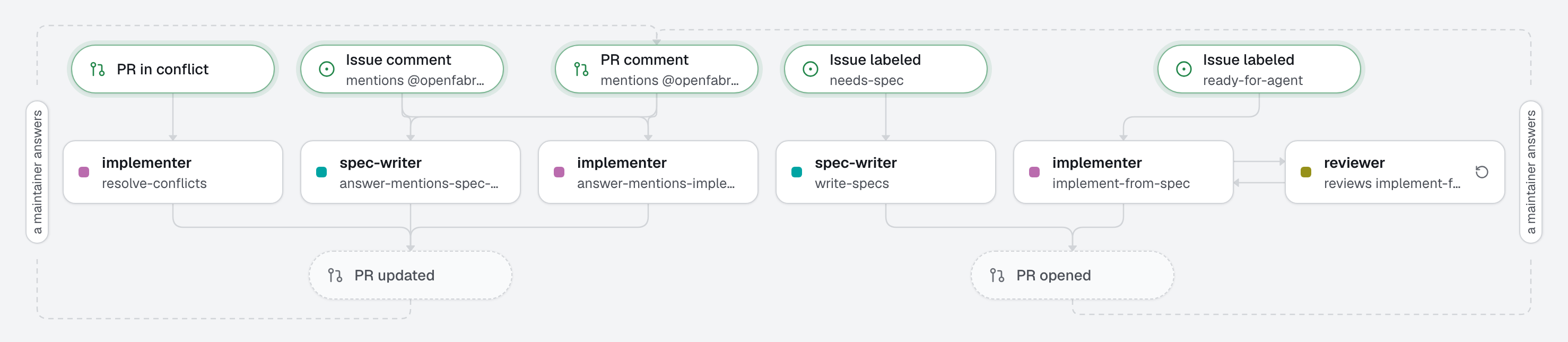
A spec as a pull request, approved by a human, before any code.
issue.labeled needs-specready-for-agent
3 agents3 automations
openfabriq init --example 10-spec-firstThe work nobody schedules: dependencies, docs, release notes, triage, security.
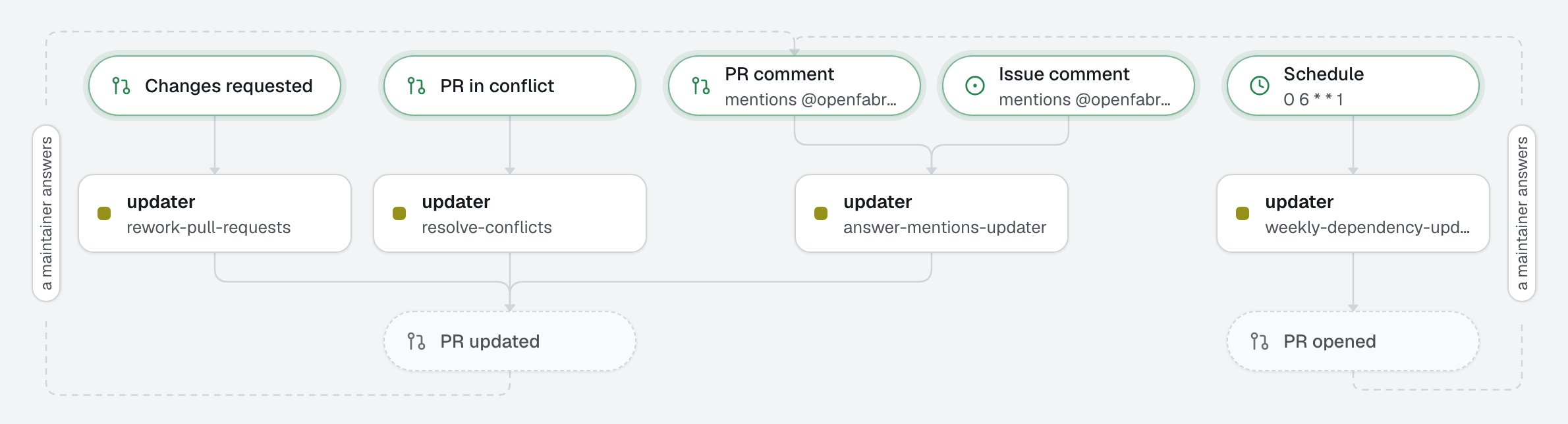
Safe minor and patch updates in one pull request; major updates listed for a human.
schedule, Monday
1 agent3 automations
openfabriq init --example 11-dependency-updates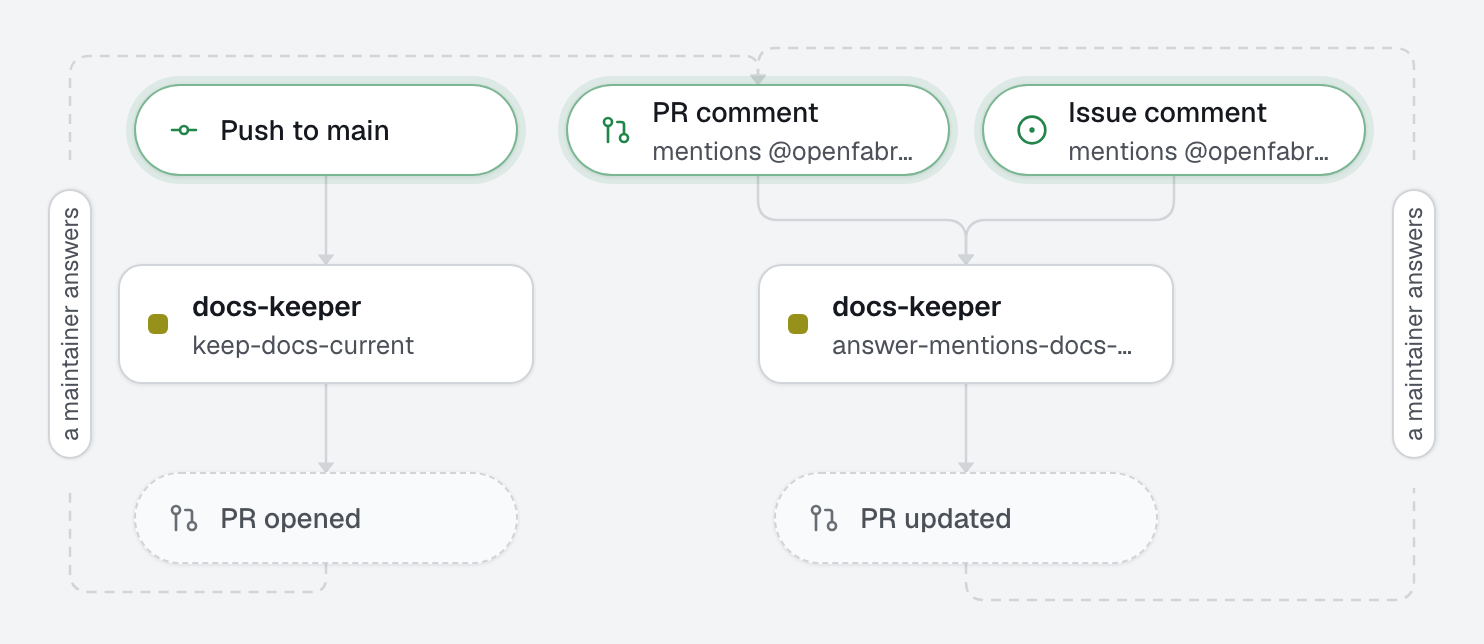
Keeps the README and docs in line with what was merged.
default_branch.updated
1 agent1 automation
openfabriq init --example 12-docs-drift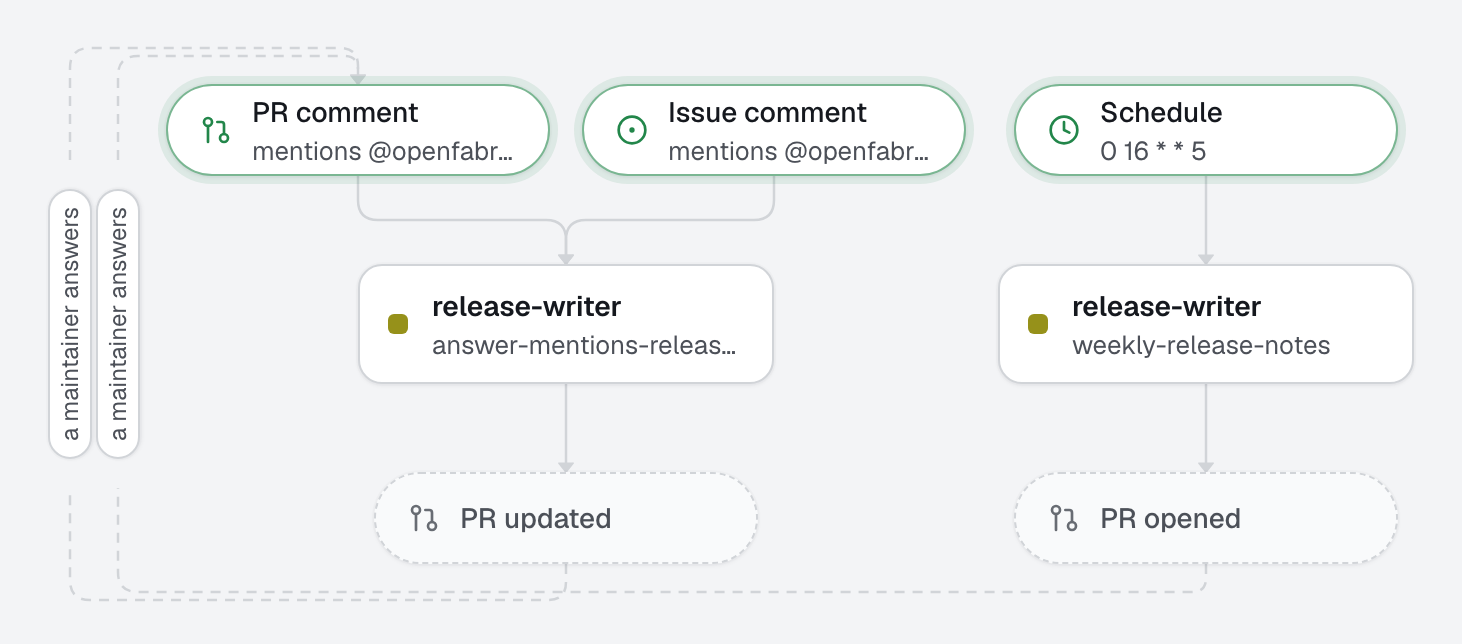
Writes the week's CHANGELOG entry for users.
schedule, Friday
1 agent1 automation
openfabriq init --example 13-release-notes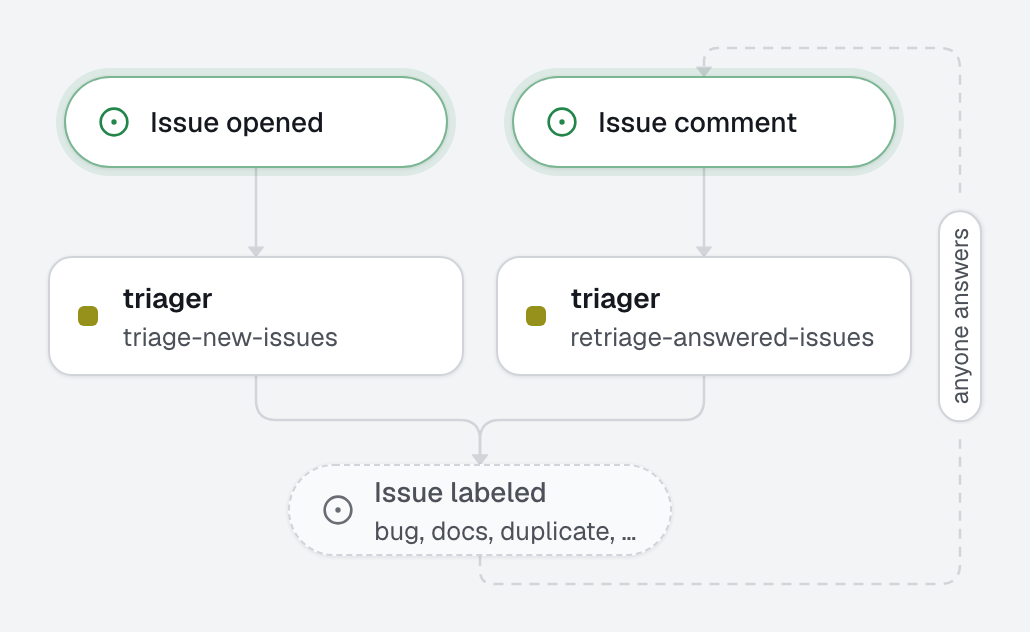
Classifies, prioritizes and answers new issues; asks for what is missing.
issue.openedissue.commented
1 agent2 automations
openfabriq init --example 14-issue-triage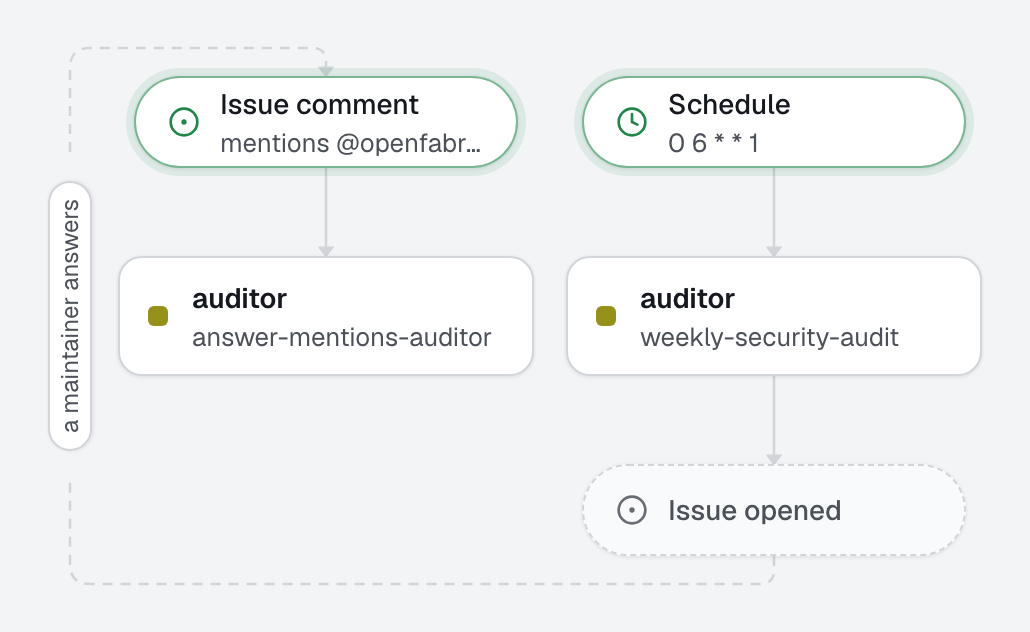
Weekly dependency audit and review of attack surfaces.
schedule, Monday
1 agent1 automation
openfabriq init --example 15-security-audit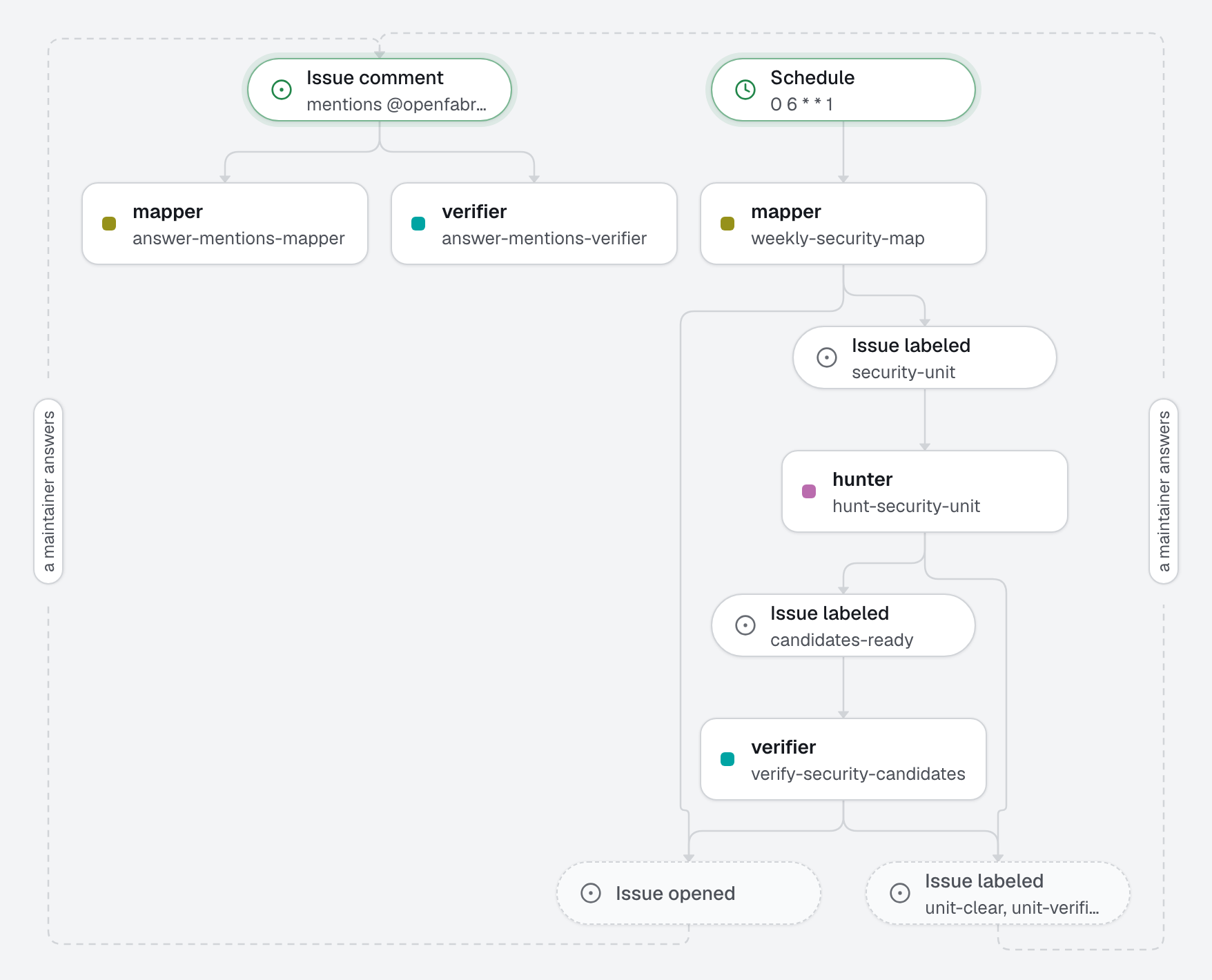
A mapper picks the riskiest surfaces, a hunter per surface looks for flaws, a verifier on a stronger model tries to disprove each one.
schedule, Mondayissue.labeled
3 agents3 automations
openfabriq init --example 16-security-review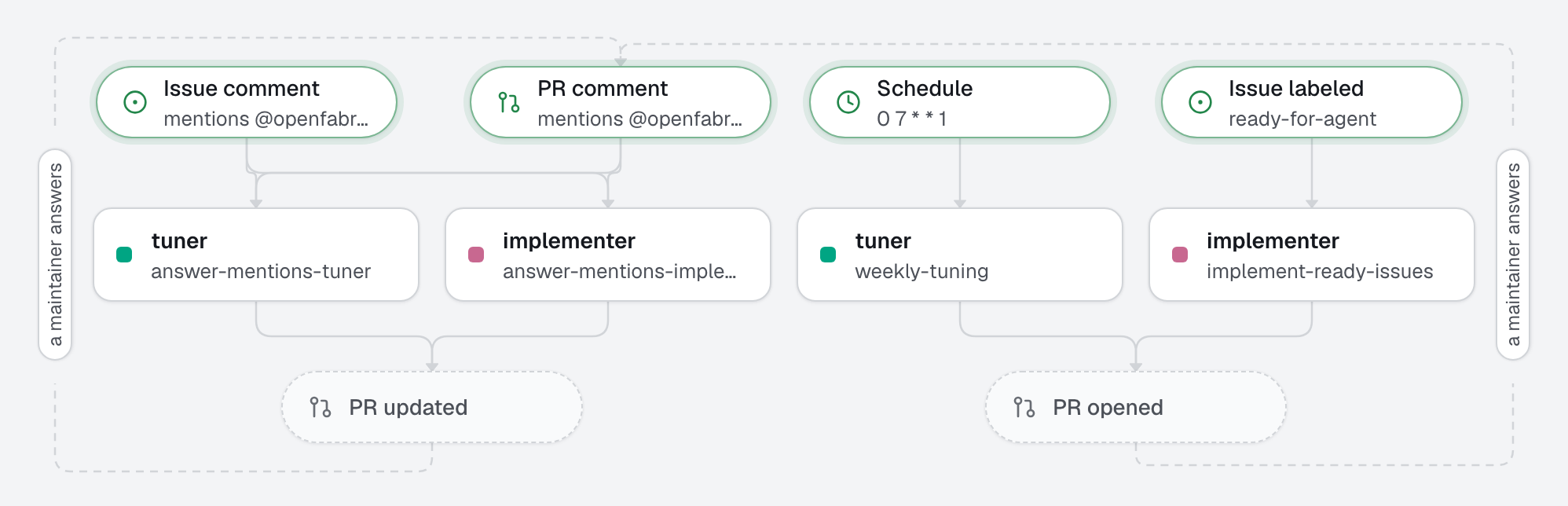
Reads what people did with the factory's pull requests and proposes one change to an agent's brief a week, with the evidence.
schedule, Monday
2 agents2 automations
openfabriq init --example 17-factory-tuner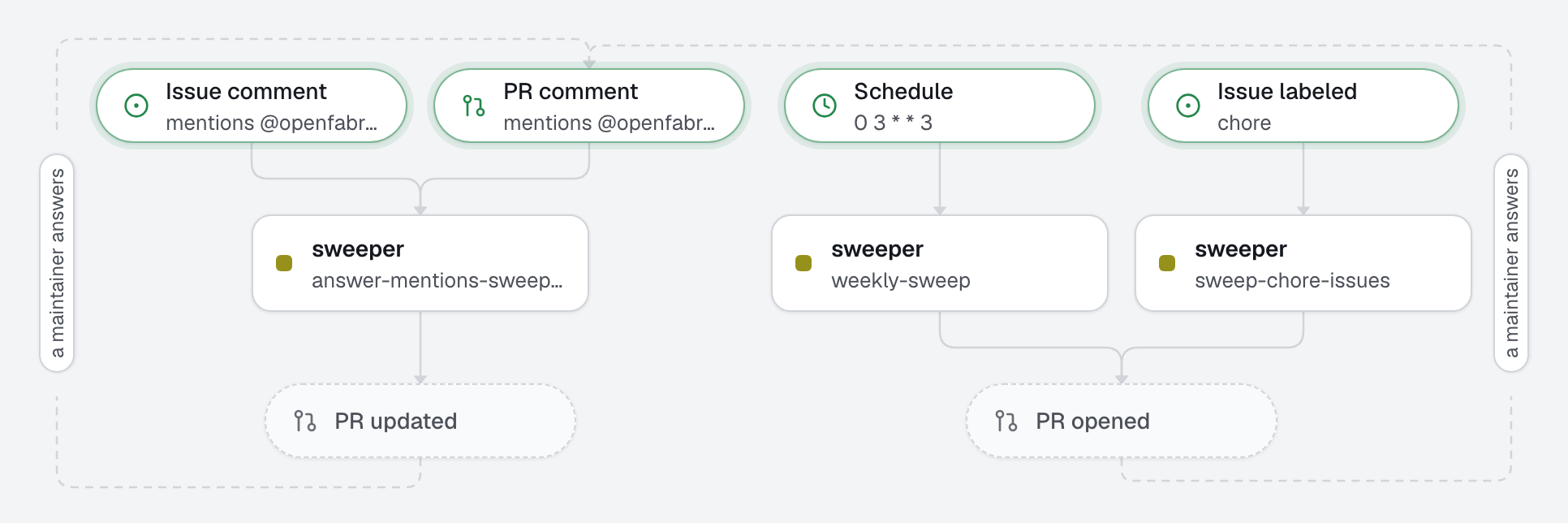
One small mechanical cleanup per pull request.
issue.labeled choreschedule
1 agent2 automations
openfabriq init --example 18-tech-debt-sweeper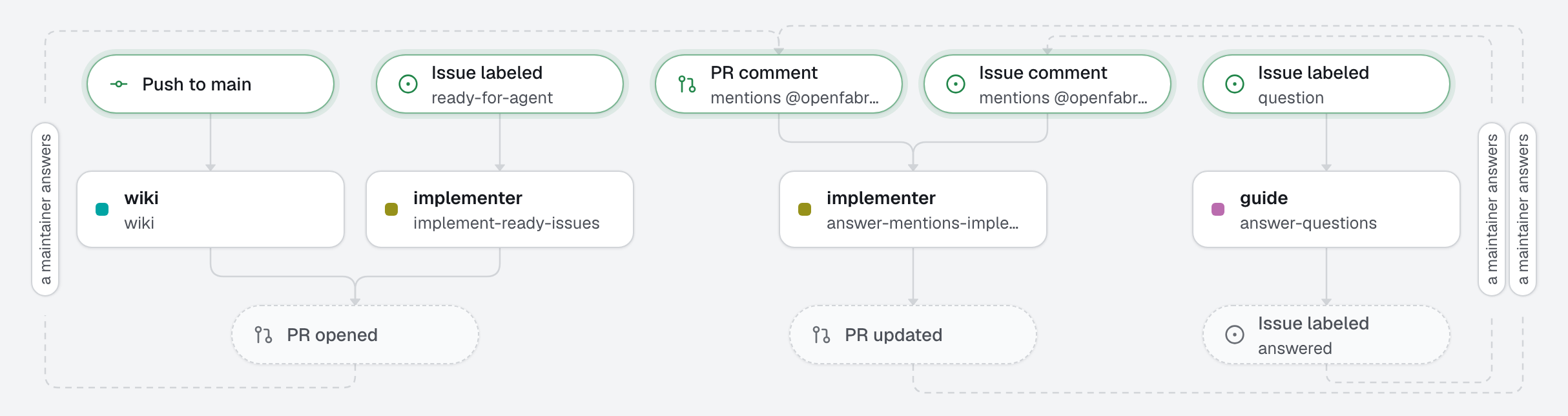
Keeps a map of the code in wiki/ after each merge; a guide answers questions from it, the implementer starts from it.
issue.labeled questionready-for-agentafter each merge
2 agents2 automations
openfabriq init --example 19-living-wiki
A monthly SEO audit of the built site, with no paid service: safe fixes as a pull request on a label, the words left to a person.
schedule, monthlyissue.labeled seo-fixpull_request.labeled
2 agents4 automations
openfabriq init --example 20-seo-auditWork that starts in Slack, in Sentry or from any service that sends a webhook.
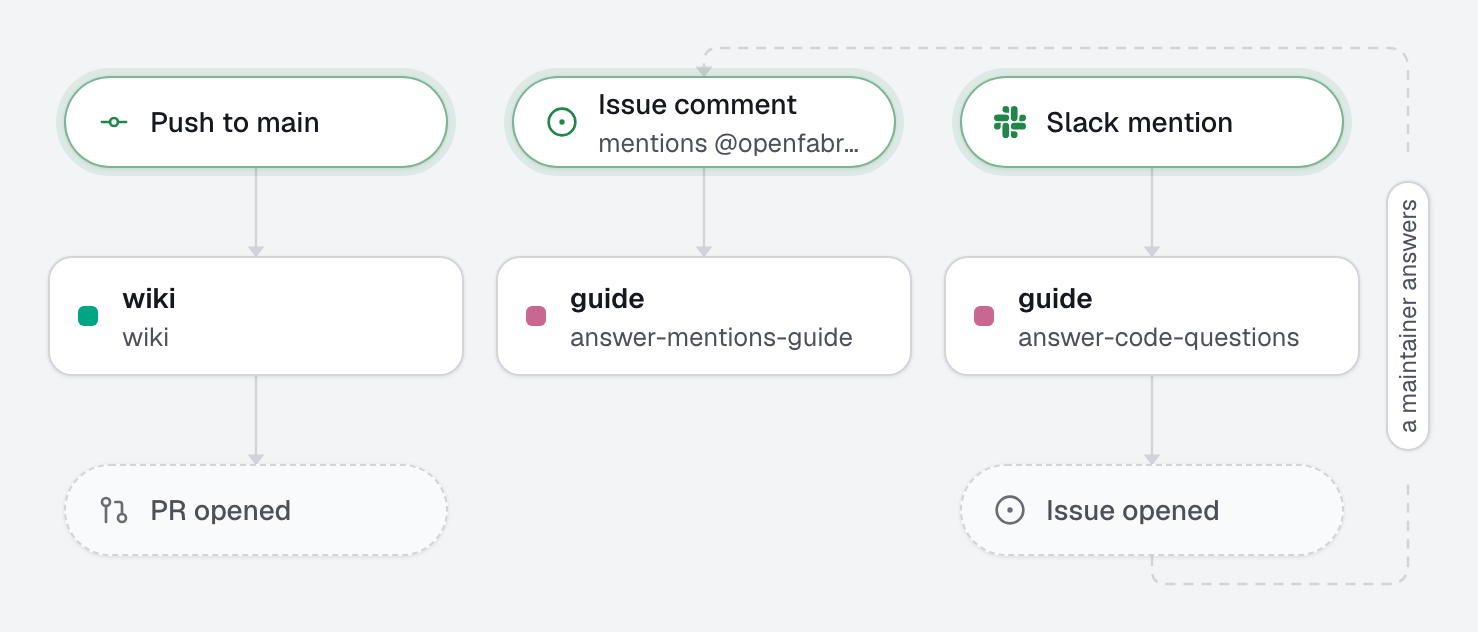
Answers questions about the code in Slack, read-only; files issues on request.
slack.mentioned
1 agent1 automation
openfabriq init --example 21-slack-codebase-qa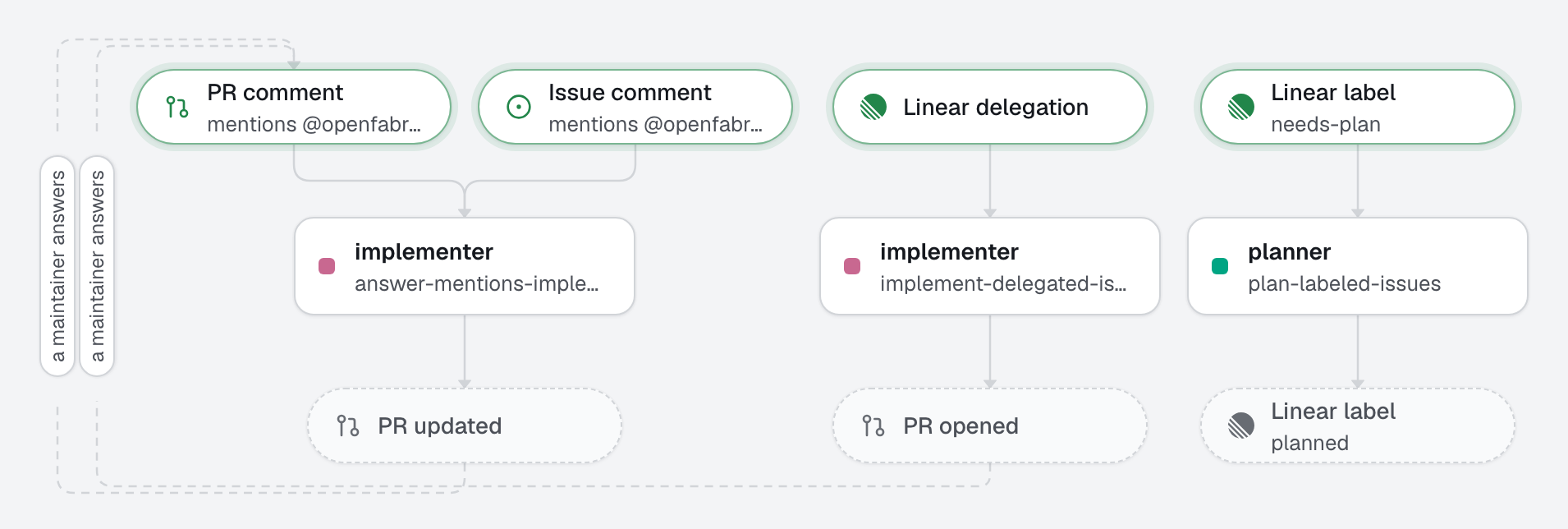
A Linear label gets an implementation plan in the issue; assigning the issue to openfabriq gets a pull request.
linear.issue.labeled needs-planlinear.issue.delegated
2 agents2 automations
openfabriq init --example 22-linear-delivery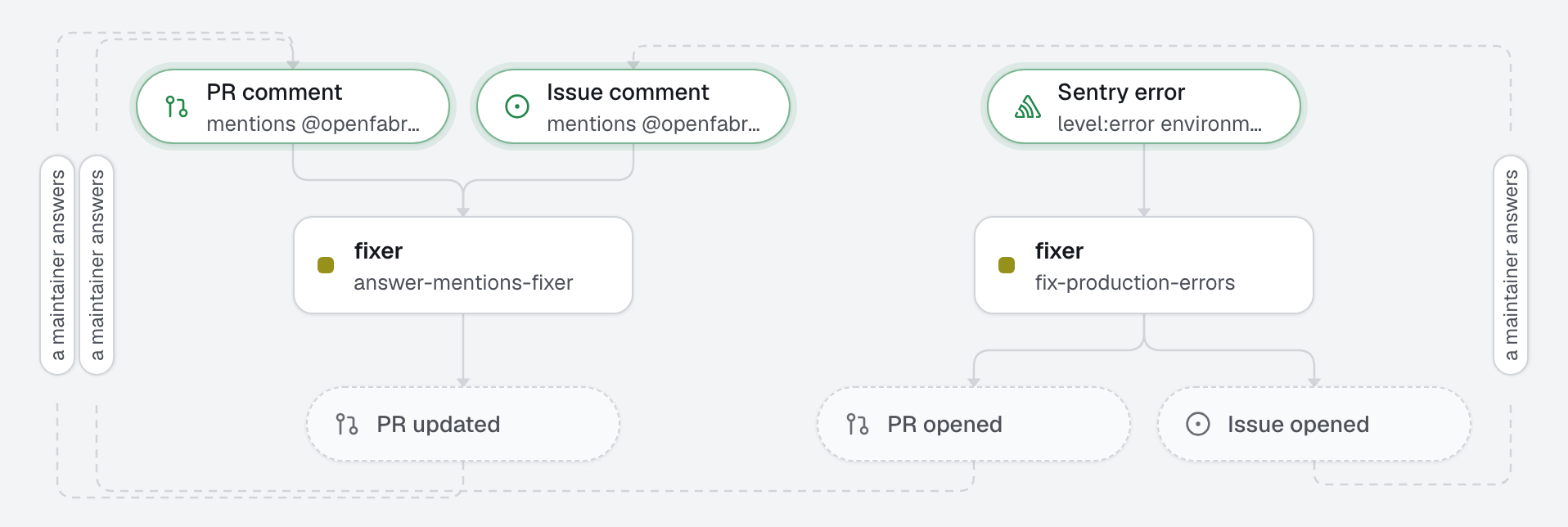
A new production error becomes a fix with a regression test, using Sentry's MCP server.
sentry.issue.created
1 agent1 automation
openfabriq init --example 23-sentry-autofix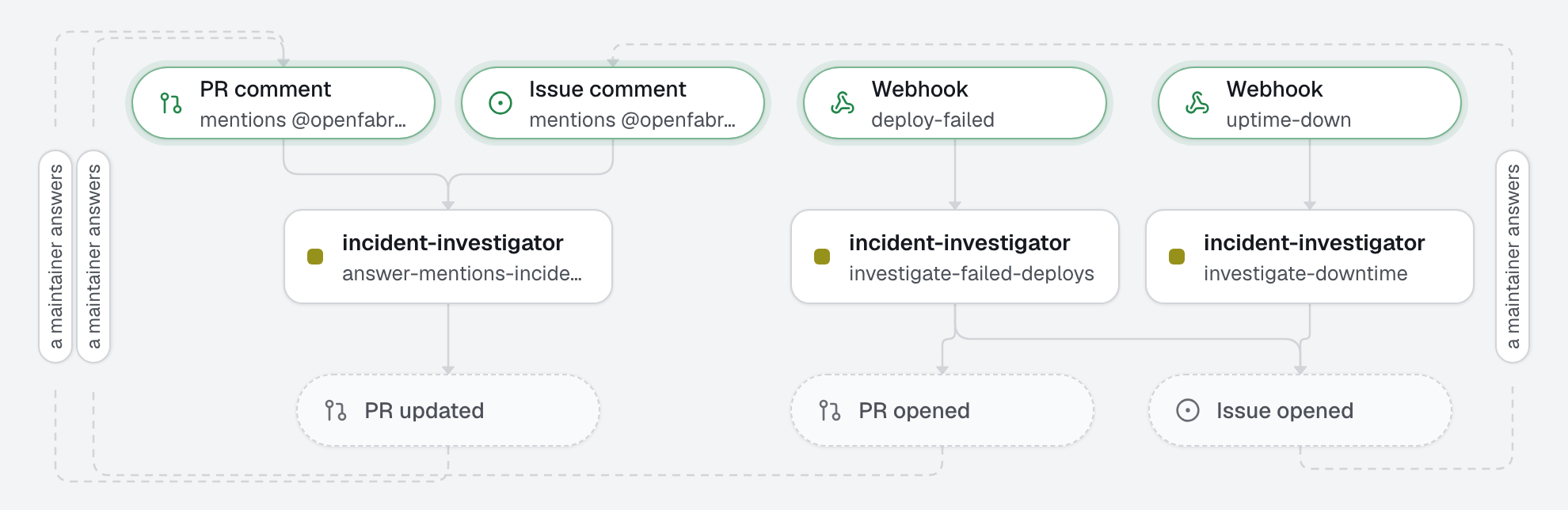
A failed deploy or a downtime alert becomes an incident issue, or a revert.
webhook.received
1 agent2 automations
openfabriq init --example 24-deploy-failure-webhookLong projects driven by labels, such as a whole site migration.
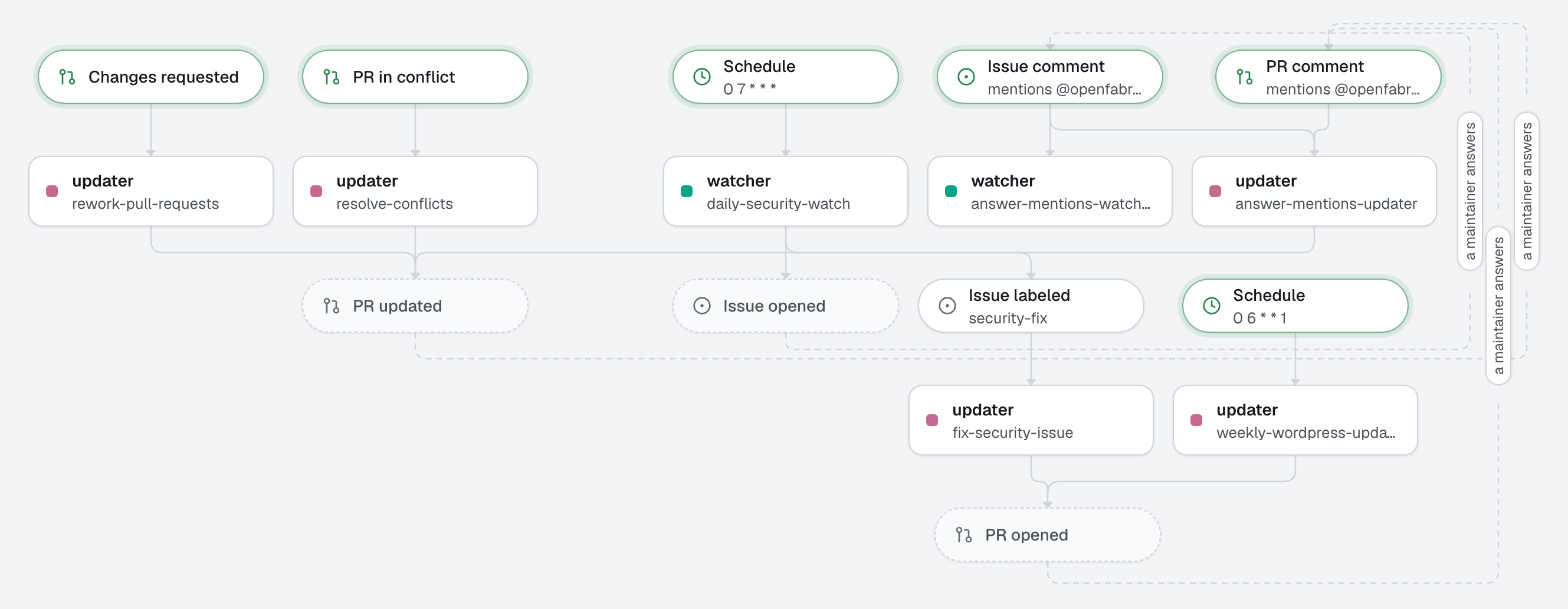
Keeps a Composer-managed WordPress site up to date and safe: weekly updates, a daily WPScan watch, a fix per new vulnerability.
scheduleissue.labeled security-fix
2 agents5 automations
openfabriq init --example 25-wordpress-maintenance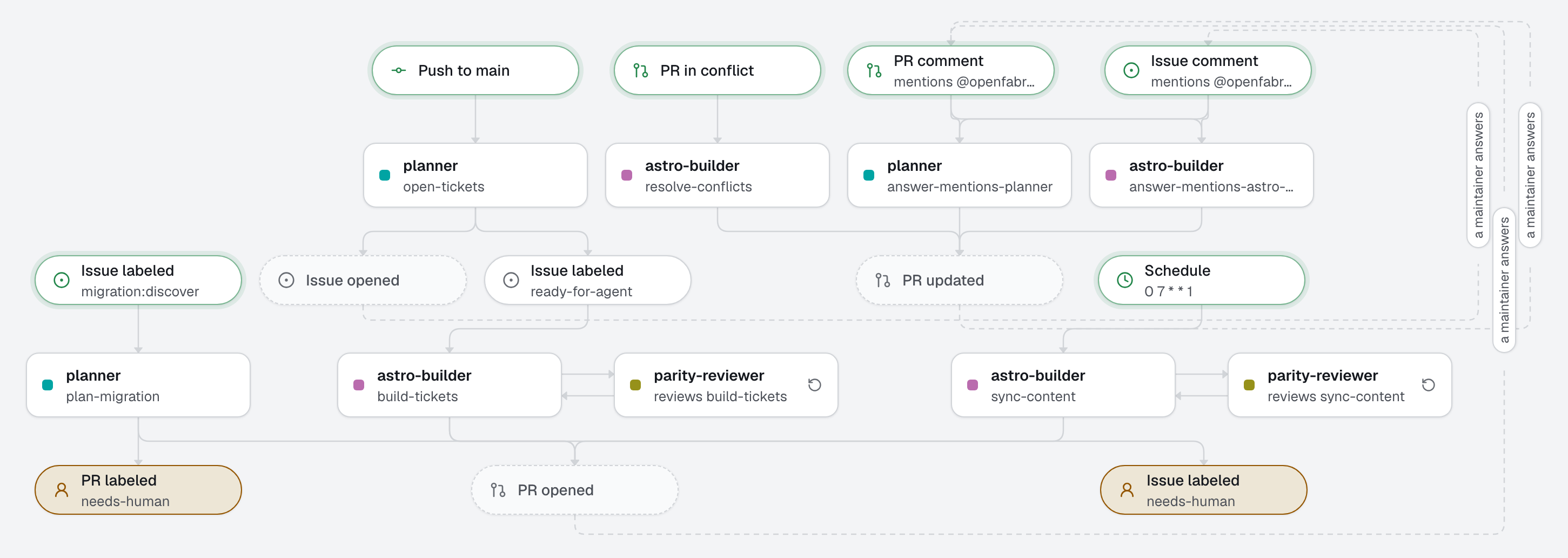
Moves a Webflow site to Astro from one plan you merge, each page checked against the old one before its pull request opens, while editors keep writing in Webflow, with a weekly content sync.
A label on a migration issuepushes to the default branchpull requests
3 agents5 automations
openfabriq init --example 26-webflow-to-astro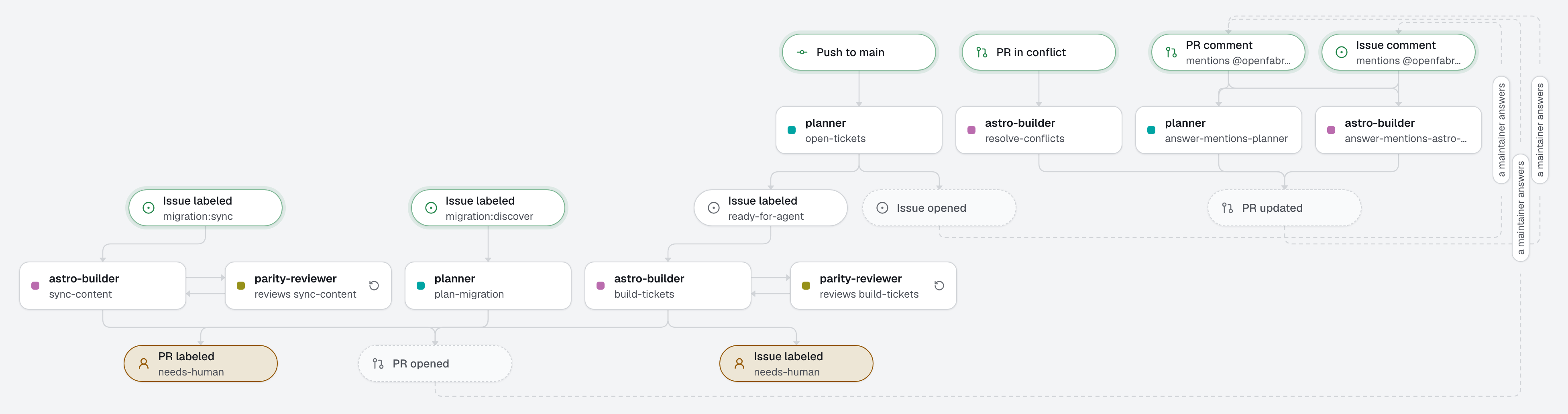
Moves a Framer site, which exports no code, to Astro from one plan you merge: the agents read the published pages and a CMS export, check each page against the old one before its pull request opens, and hold no Framer key.
A label on a migration issuepushes to the default branchpull requests
3 agents5 automations
openfabriq init --example 27-framer-to-astroA few practices worth keeping in a factory of your own.
tools: [read], and labels are restricted (add_labels: [ready-to-merge]).needs-info, and stop.ready-to-merge and one of risk:low, risk:medium, risk:high, with a Risk: line that says what to look at. needs-human keeps one meaning: the engine gave up, and a person takes over.opus when the factory runs on sonnet: a different model does not share the author's blind spots.browser-evidence skill covers what shows on screen.